.png)
Feb 2026 STEM Project: Designing and Building My Own Bluetooth Speaker

Project Theme: Electronics, Signal Processing, and System Integration
Outcome: Fully functional DIY Bluetooth speaker with clean sound and stable wireless connectivity
After building a rubber band–powered airplane last month, I wanted this project to move from mechanical engineering into electronics.
So this month, I built my own Bluetooth speaker system from scratch.
Not a plug-and-play gadget.Not a pre-assembled kit.
A fully wired, battery-powered system with speakers, amplifier board, Bluetooth module, and enclosure - all assembled and tested manually.
And yes, it connects to my iPhone and media system and actually sounds good.
The Goal
The objective wasn’t just to “make sound.”It was to understand how a wireless audio system works from signal input to sound output.
That meant breaking the system into components:
Bluetooth receiver module
Audio amplification circuit
Dual 4Ω 3W speakers
Power supply (battery pack)
On/off switch
Wooden acoustic enclosure
Each piece plays a specific role. If one fails, the system fails.
Understanding the System (Signal Flow)
Here’s what happens when I play music:
Wireless TransmissionMy phone sends digital audio data over Bluetooth.
Bluetooth ModuleThe onboard receiver decodes the digital signal into an analog audio signal.
Amplifier CircuitThe amplifier increases signal strength so it can physically drive the speakers.
Speakers (Energy Conversion)Electrical signals move the speaker cones, converting electrical energy into mechanical vibration - which becomes sound waves.
Acoustic EnclosureThe wooden box improves resonance and reduces distortion, making the sound fuller.
It’s essentially a compact energy transformation chain:Digital → Electrical → Mechanical → Acoustic
That chain is what makes engineering so interesting.
The Build Process
Step 1: Wiring the Circuit
This part required precision.
The red (positive) and black (ground) wires had to be connected properly. Reversing polarity can damage components instantly. I double-checked every connection before powering the board.
Lessons learned:
Always confirm polarity.
Secure loose wires to avoid short circuits.
Don’t rush electrical work.
One misconnection can fry a board.
Step 2: Mounting the Components
The dual speakers were installed into a laser-cut wooden enclosure. Alignment mattered - even small gaps affect sound quality.
I mounted:
Bluetooth/amplifier PCB
Battery holder
Switch
Two 4Ω speakers
Clean layout improved both reliability and aesthetics.
Step 3: First Power-On Test
This is the moment of truth in any electronics build.
I inserted batteries, flipped the switch… and waited.
The Bluetooth module powered up.I paired it with my phone.And within seconds music played.
No smoke. No distortion. No silence.
That’s always a good sign.
Sound Quality Observations
For a compact DIY build, the sound output is surprisingly clean.
Key observations:
Dual speakers improve stereo separation.
The wooden enclosure enhances bass response.
Proper impedance matching (4Ω speakers with the board) prevents overload.
It’s not a commercial subwoofer but it’s clear, balanced, and completely functional.
And I built it.
Engineering Challenges
This project required a different kind of thinking compared to my airplane build.
Instead of lift and aerodynamics, I had to consider:
Current flow and voltage stability
Resistance and impedance
Short-circuit risk
Mechanical stability of internal components
Troubleshooting electronics requires patience. You can’t “see” electricity the way you see a plane stall. You have to reason through it logically.
That mental shift was one of the most valuable parts of this project.
Final Result
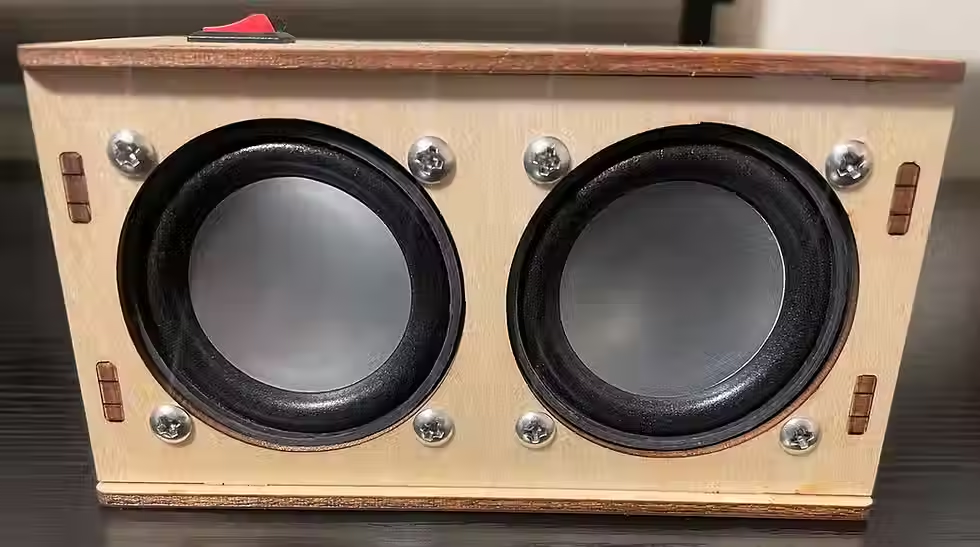
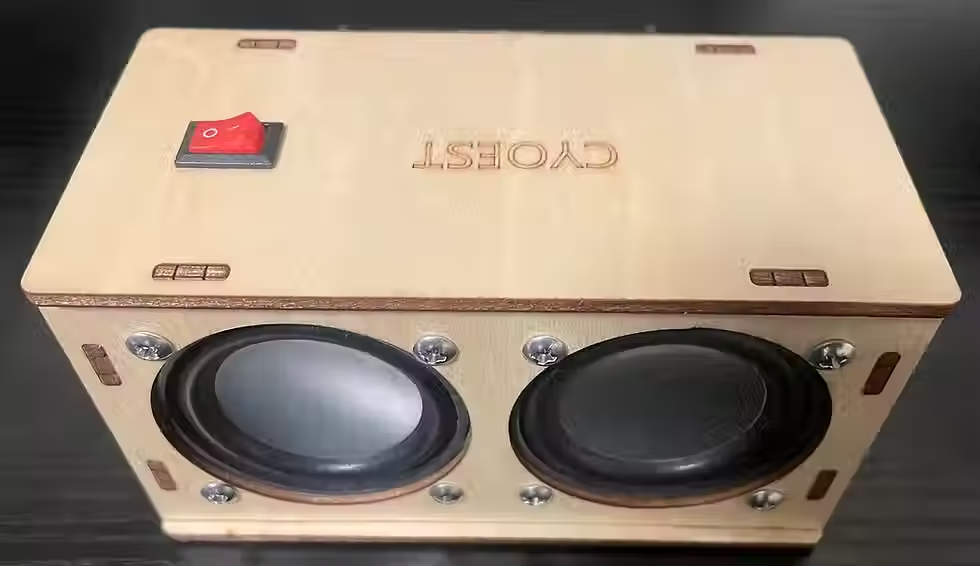
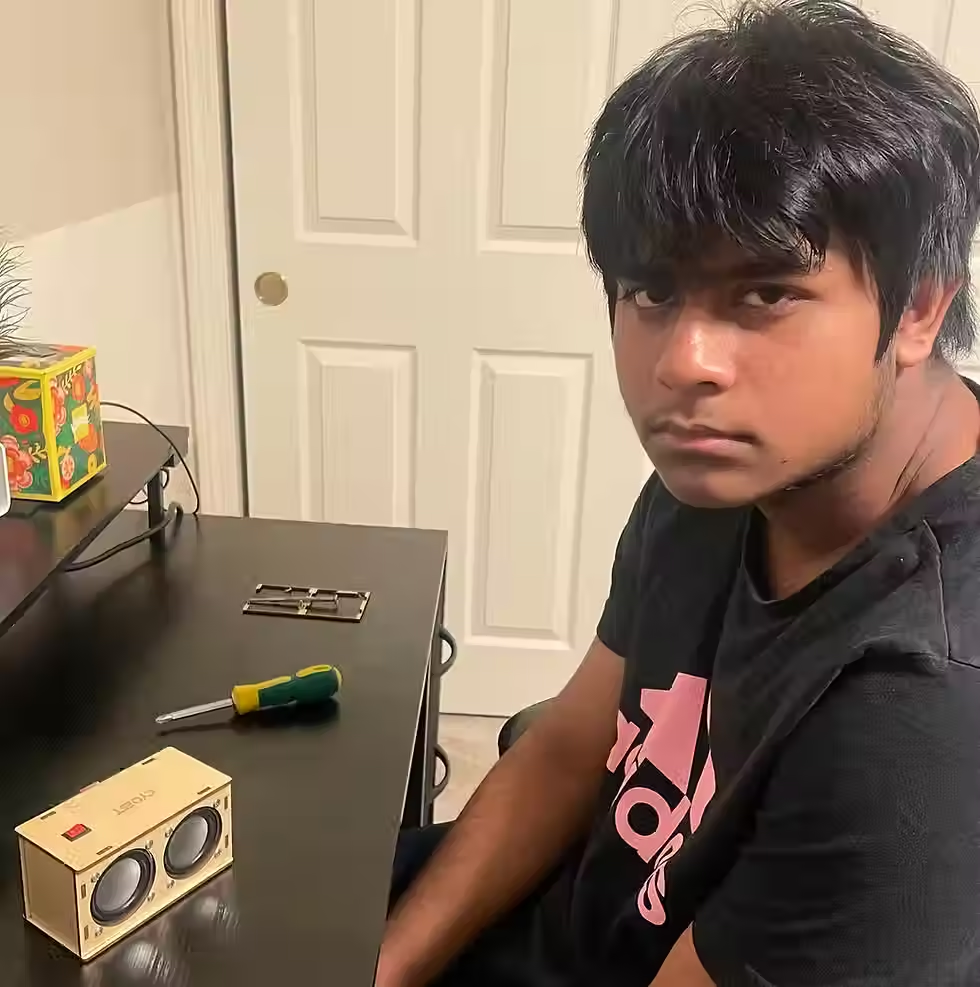
A fully assembled, self-powered Bluetooth speaker system that:
Connects wirelessly
Produces clear stereo audio
Demonstrates integrated electrical and mechanical design
More importantly, it represents a complete engineering cycle:Design → Assemble → Test → Validate
STEM Skills Demonstrated
Electrical Engineering Fundamentals
Wired a multi-component circuit with correct polarity
Applied basic principles of voltage, current, and resistance
Integrated power, signal, and output subsystems
Signal Processing & Audio Systems
Understood digital-to-analog conversion
Applied amplification concepts to drive speakers
Analyzed impedance compatibility
Systems Thinking
Broke down a complex device into functional modules
Ensured compatibility between power, signal, and mechanical components
Evaluated how enclosure design affects acoustic performance
Debugging & Risk Management
Identified potential short-circuit risks
Verified wiring before power-up
Applied logical troubleshooting principles
Technical Documentation
Explained the full signal chain from Bluetooth transmission to sound output
Created a visual and written engineering record of the build
What This Project Taught Me
This build made electronics feel real.
It’s easy to take wireless devices for granted. But building one from components forces you to appreciate how many systems are working simultaneously.
It also reinforced something I’m noticing with these monthly projects:
Engineering is about integration.
You can understand individual concepts e.g., energy, circuits, acoustics but real engineering happens when those concepts work together.
What’s Next
Two projects in, and I’m seeing the bigger pattern:
Month 1: Mechanical energy & aerodynamics
Month 2: Electronics & signal systems
Next month, I may explore microcontrollers or renewable energy systems to combine software and hardware.


Comments